

What are you wondering? Get in touch!
“You can, you should, and if you’re brave enough to start, you will.”
Stephen King
Send us a message with your questions or requests.
OUR THINKING
Insights



“You can, you should, and if you’re brave enough to start, you will.”
Stephen King
Send us a message with your questions or requests.
OUR THINKING
This week we opened the Luxury Markets course at Sotheby’s Institute of Art with 30 professionals from across the world.
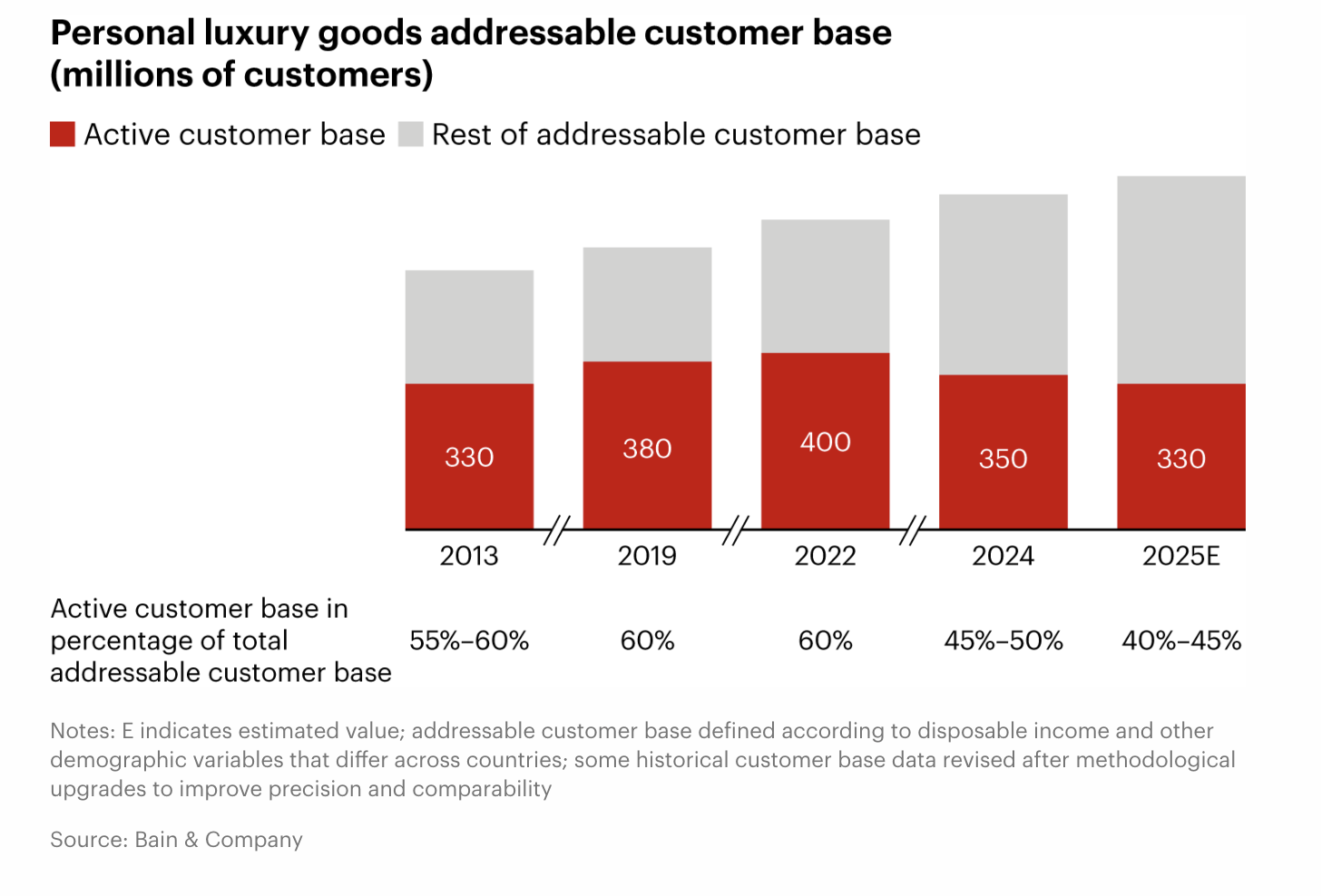
We began with the 2025 study from Bain & Company
The data confirms what many leaders have sensed. After years of exceptional acceleration, the global luxury market has entered a phase of stabilization. Personal luxury goods have experienced a modest contraction, and over the past two years the active customer base has progressively narrowed.
The addressable market remains. Wealth remains.
What has shifted is participation.
Meaning Is the New Leadership: The Human Edge in an AI-Driven World
Yet in my coaching conversations with senior leaders, one truth has become increasingly clear:
AI interprets data. Humans make meaning.
And meaning-making — not information — is where strategic leadership now begins.
AI accelerates the availability of answers, but leadership begins in the space after the answer — the space where interpretation becomes judgment, insight becomes perspective, and information becomes choice.
A system can identify patterns.
Only leaders can discern significance.
Only leaders can sense timing, relational dynamics, ethical implications, and the invisible forces moving through a team or an organisation.
This is the territory AI cannot inhabit — the human domain of meaning.
The leaders who thrive in AI-rich environments are not defined by how much they know but by how they think and how they perceive. They ask questions that open the field of inquiry. They see across systems, not just within them. They hold judgment until the right moment rather than seeking premature closure. And when a decision must be made, they act from awareness rather than urgency.
These are not technical skills.
They are human capacities — and they sit at the heart of modern leadership.
Cognitive sovereignty is the discipline of staying connected to one’s own judgment, values, and perception while engaging with increasingly intelligent systems.
It does not mean resisting AI.
Strategic thinking is a leadership rhythm.
It’s the continuous movement between two essential capacities — Systems Thinking and Strategic Focus.
Leaders expand their awareness to sense patterns, interconnections, and long-term dynamics. Then they converge their energy to define priorities and act with clarity.
This rhythm — expansion and convergence — is what allows leaders to stay grounded amid complexity and turn insight into meaningful action.
Build Teams That Can Hold Tension
Conflict as a creative force for connection, clarity, and innovation
If you want creativity, innovation, and growth — you have to design for difference.
You have to build systems that can hold tension without collapsing under it.
Here’s where to start:
Normalize discomfort. Don’t rush to agreement. Stay in the “creative heat” of the conversation.
Expand the frame. Assume there are more than two sides. Ask: “What are all the truths in the room?”
Push for clarity, not closure. You don’t need resolution right away — you need understanding.
Value the quiet voices. Often, the most powerful perspectives are the ones not yet spoken.
And most of all:
Support the system in crossing the edge.
That’s the edge between what’s known and what’s possible.
When teams learn to pause, breathe, and stay present at the edge — rather than retreat — they move forward with more trust, creativity, and cohesion.
When conflict is embraced with care, it becomes not a threat to harmony, but the pathway to deeper alignment.